

A beautiful home is not just about expensive furniture, stylish decorations, or modern architecture. It is about creating a comfortable, functional space that supports your everyday lifestyle. The Homenumental Home Infoguide from Homehearted brings together practical home design ideas, renovation planning, smart organization, and maintenance strategies to help homeowners make better decisions without unnecessary spending.
What I find particularly useful about this approach is its focus on improving what you already have instead of following every decorating trend. Whether you own a large house, live in a small apartment, or want to renovate a single room, this guide explores how to create a more organized, welcoming, and efficient living environment.
What Is the Homenumental Home Infoguide From Homehearted?
The Homenumental Home Infoguide from Homehearted is a name used across online home improvement articles to describe a practical approach to residential design, organization, renovation, and property care. Rather than focusing exclusively on appearance, the approach emphasizes everyday comfort, functionality, and long-term maintenance.
Its main purpose is to help homeowners understand which improvements matter, how to plan them, and where to spend their budgets wisely. Although several websites associate the name with Homehearted, the precise origin and official publication history of a single definitive guide are not independently established.
What Does the Homenumental House Infoguide Cover?
The Homenumental House Infoguide by Homehearted brings together several aspects of home improvement. Its central idea is that a well-designed home should be attractive, practical, affordable to maintain, and adaptable to changing needs.
Here is an overview of the main topics commonly discussed under this approach.
| Key Area | What It Covers | Main Benefit |
| Interior Design | Colors, furniture, lighting, and layouts | Comfortable, attractive rooms |
| Renovation Planning | Budgets, materials, project priorities | Better spending decisions |
| Space Organization | Storage, decluttering, furniture placement | Less clutter and wasted space |
| Home Maintenance | Inspections, repairs, seasonal care | Earlier identification of problems |
| Energy Efficiency | Insulation, lighting, heating, cooling | Potentially lower energy use |
| Smart Home Technology | Connected devices and automation | Added convenience and control |
These topics work together to support a home that looks appealing while remaining easy to use and maintain.
Core Home Design Principles Explained
A well-designed home should balance comfort, functionality, and visual appeal. The Homenumental Home Infoguide from Homehearted emphasizes practical design decisions that support everyday living rather than temporary decorating trends.
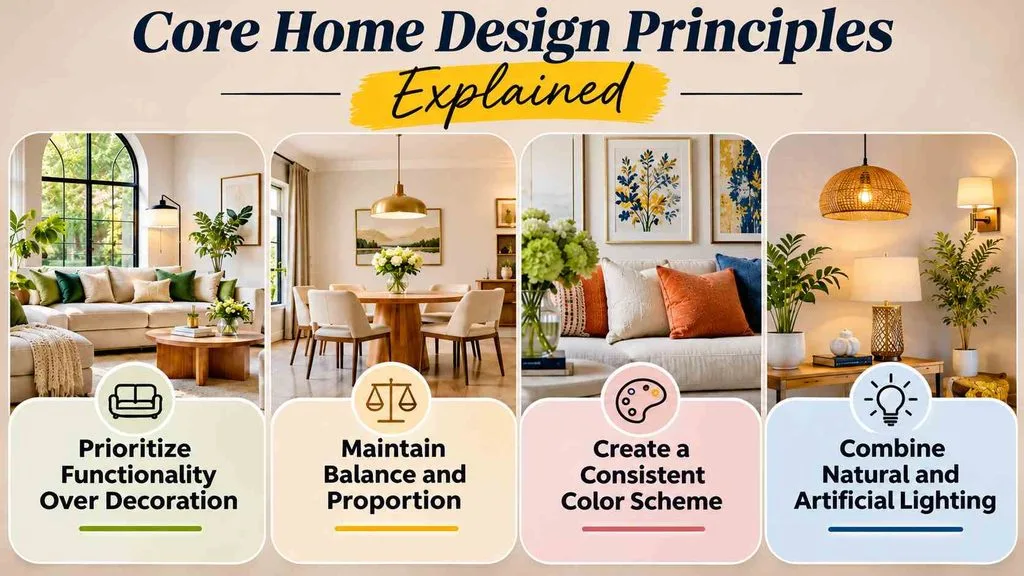
1. Prioritize Functionality Over Decoration
Choose furniture and layouts according to how each room is used. Maintain comfortable walking spaces, position frequently used items within easy reach, and avoid unnecessary furnishings that create clutter.
2. Maintain Balance and Proportion
Select furniture that suits the room’s dimensions. Oversized sofas can overwhelm small living rooms, while appropriately scaled furniture, rugs, and lighting create a more balanced interior.
3. Create a Consistent Color Scheme
Use a coordinated palette of neutral or complementary colors to connect different design elements. Introduce visual interest through cushions, artwork, natural textures, and accent furniture.
4. Combine Natural and Artificial Lighting
Maximize available daylight and introduce layered lighting for different activities. Ceiling fixtures provide general illumination, while table lamps, wall sconces, and task lights improve functionality.
Practical Home Design Ideas for Every Room
Each room serves a different purpose, so decorating decisions should reflect its practical requirements. Instead of applying the same design formula throughout the house, focus on comfort, storage, lighting, and furniture placement in individual spaces.
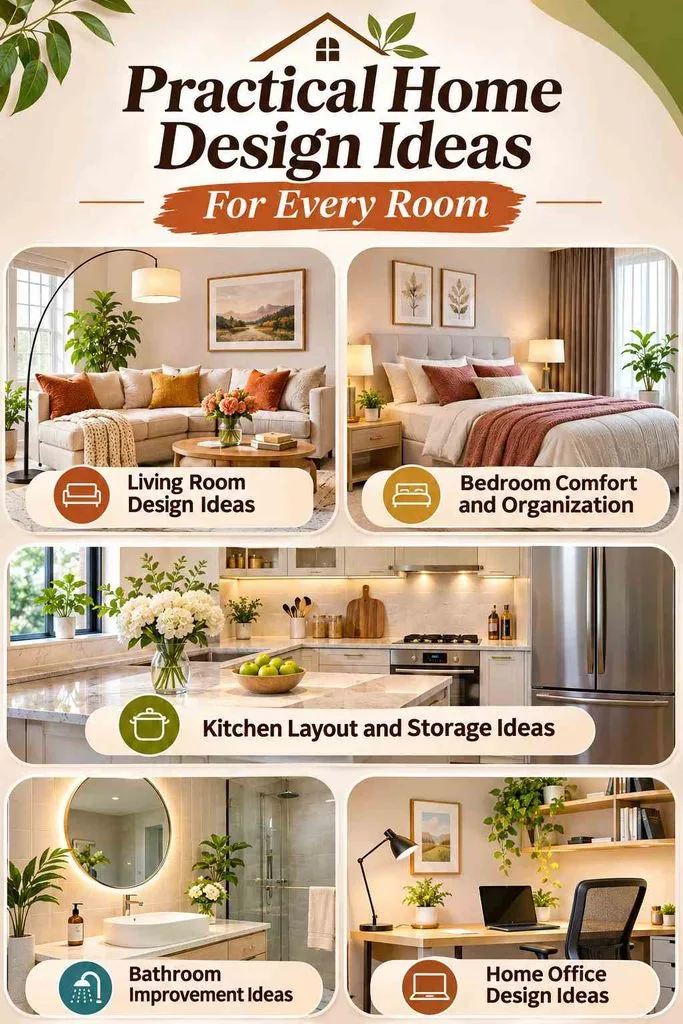
1. Living Room Design Ideas
Create a welcoming seating arrangement that encourages conversation and relaxation. Use a suitable rug to define the seating area, add layered lighting, and select furniture proportional to the room.
2. Bedroom Comfort and Organization
Choose comfortable bedding, restful wall colors, and practical bedside storage. Blackout curtains, soft lighting, and organized wardrobes can help create a more relaxing bedroom environment.
3. Kitchen Layout and Storage Ideas
Keep frequently used cooking essentials accessible and maintain sufficient countertop space for food preparation. Drawer organizers, cabinet dividers, and durable, easy-to-clean surfaces improve daily convenience.
4. Bathroom Improvement Ideas
Prioritize ventilation, moisture-resistant materials, and accessible storage. Wall-mounted shelves, organized vanity drawers, suitable mirrors, and effective lighting can improve smaller bathrooms without major remodeling.
5. Home Office Design Ideas
Position your desk to minimize screen glare and provide adequate task lighting. Choose an adjustable chair, organize cables, and use shelves or drawers to reduce distractions and maintain a functional workspace.
How to Plan a Home Renovation Without Overspending
Renovation projects become easier to manage when you establish priorities before purchasing materials or hiring contractors. Start by identifying essential repairs, measuring the affected areas, and deciding which improvements can reasonably fit your budget.
A practical renovation plan should follow this sequence:
- Inspect the property and identify existing problems.
- Separate essential repairs from decorative upgrades.
- Prepare a budget with a contingency allowance.
- Compare materials and obtain written contractor estimates.
- Confirm required permits before work begins.
- Inspect completed work before making final payments.
Structural alterations, electrical installations, and major plumbing changes should be evaluated or performed by appropriately qualified professionals.
Budget-Friendly Home Decorating Ideas
Improving a home’s appearance does not always require expensive furniture or structural modifications. Small decorative changes can refresh a room while allowing you to retain useful items you already own.
I particularly like improvements that combine visual appeal with everyday functionality. Consider updating cabinet hardware, introducing washable cushions, rearranging furniture, or adding suitable lighting to darker areas. A coordinated color palette can also help unrelated furnishings feel more cohesive.
For a more architectural approach, explore the coffered ceiling and interior design details featured in Alan Ritchson’s house. Such examples can provide inspiration without requiring homeowners to reproduce an entire luxury interior.
Smart Storage and Home Organization Solutions
Effective home organization involves giving frequently used belongings convenient storage locations. Instead of adding cabinets everywhere, identify cluttered areas and choose storage solutions based on the items you actually need to keep.

Useful options include:
- Under-bed storage: Suitable for seasonal bedding and occasionally used items.
- Wall-mounted shelving: Helps free floor space in smaller rooms.
- Drawer dividers: Keeps kitchen utensils and personal accessories organized.
- Multipurpose furniture: Combines seating, sleeping, or working space with storage.
- Labeled containers: Makes stored items easier to locate.
Avoid blocking electrical panels, ventilation openings, exits, or essential circulation routes with storage furniture.
Energy-Efficient Improvements for Modern Homes
Energy efficiency is an important part of practical residential planning because heating, cooling, lighting, and appliances influence ongoing household expenses. Begin by identifying drafts, inefficient lighting, inadequate insulation, and equipment that needs maintenance.
The U.S. Department of Energy’s Home Energy Checklist recommends actions such as maintaining heating and cooling equipment, replacing inefficient lighting, addressing air leaks, and considering an energy audit.
Smart thermostats and automated lighting can provide additional convenience when compatible with the home’s systems. For related ideas, explore our review of Tech TheHomeTrotters.com and smart home technology, which discusses connected devices and their practical uses.
Home Maintenance and Seasonal Care
Regular maintenance helps homeowners identify small problems before they develop into more extensive damage. Important tasks include inspecting plumbing connections, checking roof drainage, servicing heating and cooling equipment, and monitoring surfaces for signs of moisture.
The U.S. Environmental Protection Agency’s guide to mold and moisture explains why controlling water intrusion and indoor moisture is essential for preventing mold growth.
I recommend keeping a simple maintenance record with inspection dates, repairs, equipment details, and warranty information. Our article on Active Property Care Brandon and preventive property maintenance also explores the value of scheduled upkeep.
How to Apply the Homenumental Approach to Your Home
The most practical way to use the Homenumental Home Infoguide from Homehearted is to treat it as a planning framework rather than an exact decorating formula. Begin with one room or problem, make a manageable improvement, and evaluate the results before moving to another project.
| Step | Recommended Action | Expected Outcome |
| 1. Evaluate | Identify comfort, layout, or maintenance problems | Clear priorities |
| 2. Plan | Measure spaces and estimate expenses | Realistic project scope |
| 3. Improve | Complete essential repairs and functional upgrades | Better everyday usability |
| 4. Decorate | Add coordinated furniture, colors, and accessories | More cohesive appearance |
| 5. Maintain | Establish recurring inspection and cleaning routines | Better long-term care |
This approach is useful for renters and homeowners alike, provided that any changes comply with property rules and relevant building requirements.

Common Home Improvement Mistakes to Avoid
Even attractive home improvement projects can become inconvenient or expensive when basic planning is overlooked. One common mistake is purchasing large furniture without checking room measurements, door openings, or walking space.
Other problems include choosing decorative materials unsuitable for moisture-prone areas, overlooking lighting requirements, and beginning renovations without a realistic budget. Following online trends without considering household needs can also lead to unnecessary purchases.
My preferred approach is to evaluate durability, maintenance requirements, and daily usability before making major design decisions. A visually appealing improvement should also make the home easier to live in.
Is the Homenumental Home Infoguide Worth Following?
The Homenumental Home Infoguide approach is useful for readers seeking straightforward home improvement ideas rather than complicated design theories. Its strongest value comes from combining room planning, cost awareness, organization, energy efficiency, and property maintenance into one understandable framework.
However, it should be treated as general educational guidance, not a substitute for professional building assessments or technical specifications. Homeowners planning major renovations still need appropriate inspections, qualified contractors, and locally applicable permits.
For everyday improvements and initial project planning, the principles provide a sensible starting point.
Final Thoughts
The Homenumental Home Infoguide from Homehearted presents a practical way to think about home design, renovation, organization, and long-term property care. Its most useful lesson is that improving a home starts with understanding how each space should function, not simply choosing attractive decorations.
I believe the best home improvements are those that solve everyday problems while reflecting personal style. By planning carefully, choosing durable materials, managing expenses, and maintaining your property regularly, you can create a home that remains comfortable, organized, and welcoming for years to come.
Frequently Asked Questions
What is the main purpose of the Homenumental Home Infoguide from Homehearted?
Its main purpose is to explain practical ways to improve residential comfort, functionality, appearance, organization, and maintenance. The approach encourages homeowners to plan improvements according to their needs and available budgets.
Is the Homenumental Home Infoguide suitable for beginners?
Yes. The commonly discussed principles are accessible to beginners because they focus on everyday tasks such as measuring rooms, organizing furniture, choosing lighting, preparing budgets, and scheduling home maintenance.
Does the Homenumental House Infoguide include renovation advice?
Yes. Articles discussing the framework commonly cover renovation priorities, material selection, budgeting, contractor considerations, and project planning. Major technical work still requires appropriate professional guidance.
Can renters follow Homenumental home design ideas?
Yes. Renters can apply many principles through furniture arrangement, removable decorations, improved storage, and suitable lighting. Permanent alterations generally require permission from the property owner.
Is the Homenumental Home Infoguide an official design service?
There is insufficient independently verified information to establish that the phrase refers to a particular licensed design business or professional service. It is best understood as an online home improvement guide concept unless a specific publisher or provider can be independently confirmed.